
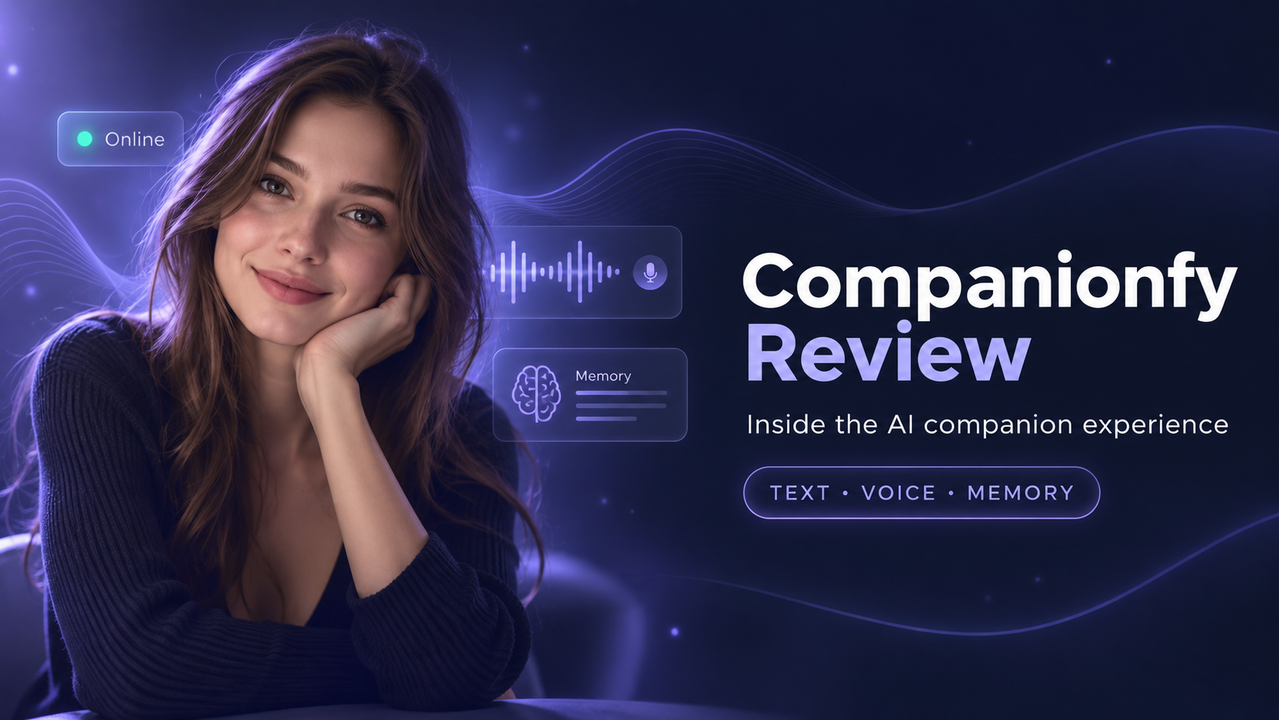
Visual identity plays an important role in AI companion platforms. A character’s appearance helps establish personality before the first message is sent, but the experience can differ significantly depending on whether that character is represented by a static image or an animated avatar.
This Companionfy review examines that distinction and explains how animated AI avatars can add another layer to browser-based conversations.
What Is a Static AI Character?
A static AI character is usually represented by a single profile picture or a collection of generated images. The character may have a detailed appearance and a defined personality, but its visual presentation remains separate from the conversation.
Static images have practical advantages. They load quickly, require fewer technical resources and can establish a recognizable identity without distracting from the text.
However, the visual experience does not change while the user is chatting. Once the image has been selected, it generally remains a fixed illustration beside the conversation.
How Animated AI Avatars Differ
Companionfy uses animated photorealistic AI avatars rather than relying only on static AI-generated pictures.
The avatars incorporate expressive facial details, natural-looking eye contact and subtle movement. This creates a more active visual presence alongside the platform’s text and voice messaging features.
Animation does not change the underlying fact that the companion is artificial intelligence. Companionfy clearly identifies its avatars as AI and does not present them as real people. Instead, movement functions as part of the interface and gives the character a more consistent on-screen presence.
Visual Presence During a Conversation
With a static character, most of the interaction takes place entirely within the message window. The image identifies who the character is, but it does not contribute further to the experience.
An animated avatar adds visible activity around the conversation. Small movements and facial details can make the interface feel less like a conventional text box and more like interaction with a digital character.
This distinction may be particularly relevant for voice conversations. When audio communication is paired with an animated visual identity, the platform can offer a more unified experience than voice messaging displayed beside a fixed profile image.
Animation Is Only One Part of the Experience
An animated avatar may attract attention, but visual presentation alone does not create a continuous AI interaction.
Companionfy combines its avatars with conversation memory, preset interaction styles and level-based progression. Memory is designed to retain relevant context from earlier conversations, while progression gradually introduces additional aspects of the companion’s personality.
The platform also offers three selectable styles: Neutral, Dominant and Jealous. Each style changes the conversational tone without requiring users to create a new character or write another set of instructions.
The avatar provides visual continuity, while memory and personality settings support continuity within the conversation itself.
Ready-Made Characters Instead of Complex Creation
Some AI platforms give users extensive control over a character’s appearance, background and behavior. That approach suits people who enjoy building every detail manually.
Companionfy is designed around a faster alternative. Users select an existing animated avatar, choose a ready-made interaction style and begin chatting without completing a character sheet or creating a fictional history.
According to the platform, the process can be completed in under two minutes through a web browser.
Animated or Static: Which Approach Is Better?
Neither format is automatically right for every user.
Static AI characters may suit people who prefer a lightweight, text-focused interface or want to imagine most of the character themselves. Animated avatars may appeal more to users who value visual presence, movement and a stronger connection between the character’s appearance and the conversation interface.
Companionfy is clearly built around the second approach. Its animated photorealistic avatars are not an occasional extra but a central part of how the platform presents AI interaction.
Final Assessment
The difference between an animated AI avatar and a static character is not simply cosmetic. It affects how the character occupies the screen and how closely the visual interface is connected to text and voice communication.
Companionfy combines animated avatars with ready-made personalities, conversation memory and direct browser access. For adults who prefer a visually dynamic AI companion without complex character configuration, this combination defines the platform’s main point of difference.
More information is available on the official Companionfy website.